

There’s nothing like floor-to-ceiling windows to capture a stunning view. They fill a room with natural light, create a sense of openness, and make a striking architectural statement. But all that glass can also bring glare, heat, privacy concerns, and one very practical question: How do you cover floor-to-ceiling windows without losing everything you love about them?
Custom window treatments can help you manage the challenges while preserving the view and contemporary look. Here are five things to consider when choosing shades, blinds, sheers, or other window coverings for floor-to-ceiling windows.
1. Preserve the View
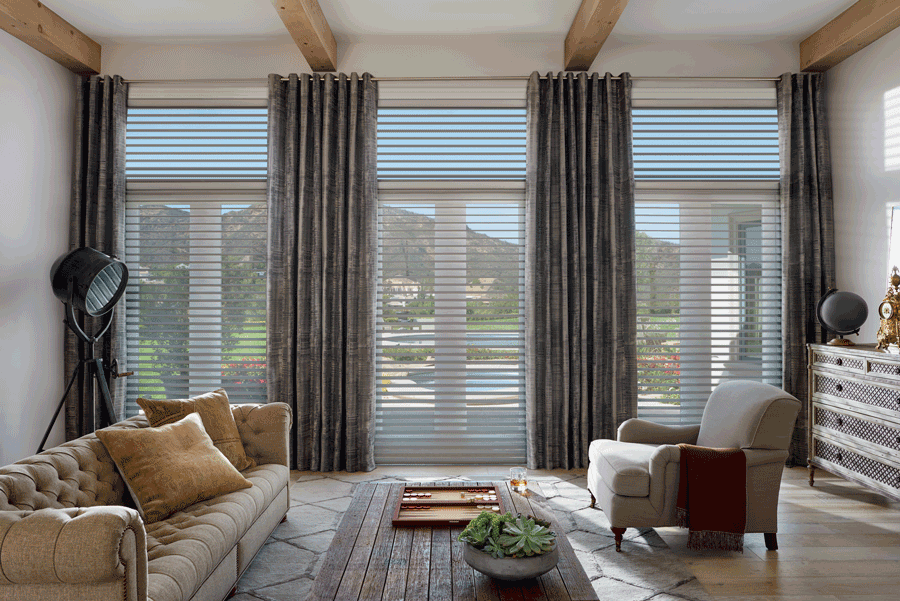
That fabulous view may be one of the reasons you love your floor-to-ceiling windows, so covering them can seem counterintuitive. Fortunately, you don’t necessarily have to choose between coverage and your view.
Sheer shades can soften incoming sunlight and reduce glare while maintaining a connection to the outdoors. Silhouette® Window Shadings, for example, combine sheer fabric with adjustable vanes so you can manage light and privacy while still enjoying softened views through the window.
2. Control Natural Light & Glare
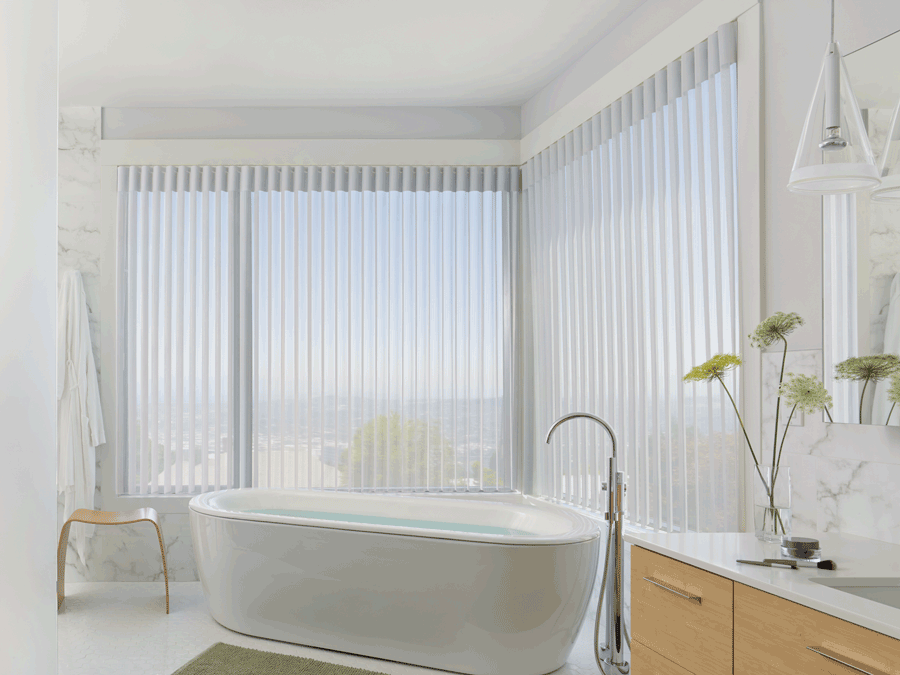
Natural light is one of the biggest advantages of floor-to-ceiling windows, but the amount and intensity can change dramatically throughout the day. Direct sunlight can create glare on screens and furnishings, increase UV exposure, and make certain areas of the room uncomfortable.
The right treatment lets you adjust rather than eliminate that light. Luminette® Privacy Sheers use vertical fabric vanes that rotate to manage light, privacy, and the view, making them particularly useful across wide expanses of glass.
3. Add Privacy & Improve Comfort
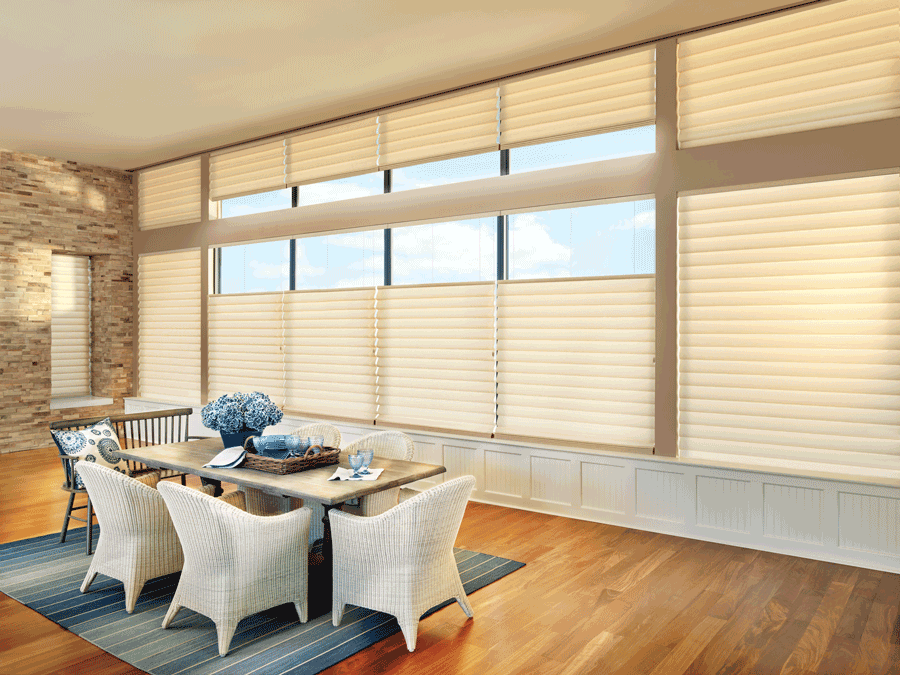
Bare floor-to-ceiling windows can look beautifully minimal during the day, but they may feel very different after dark. Large expanses of glass can expose living spaces to outside views, while direct Texas sunlight can contribute to uncomfortable interior temperatures during the day.
Custom shades give you more control over both concerns. Depending on the window and product, top-down/bottom-up shades can let you cover the portion of the window where privacy is needed while keeping another portion open for natural light.
You also don’t necessarily have to cover every piece of glass. If your floor-to-ceiling windows include transoms, angles, or other architectural details, your designer can help determine whether some portions can remain uncovered while treating the areas where light, heat, or privacy are concerns.
4. Choose a Style That Complements the Architecture
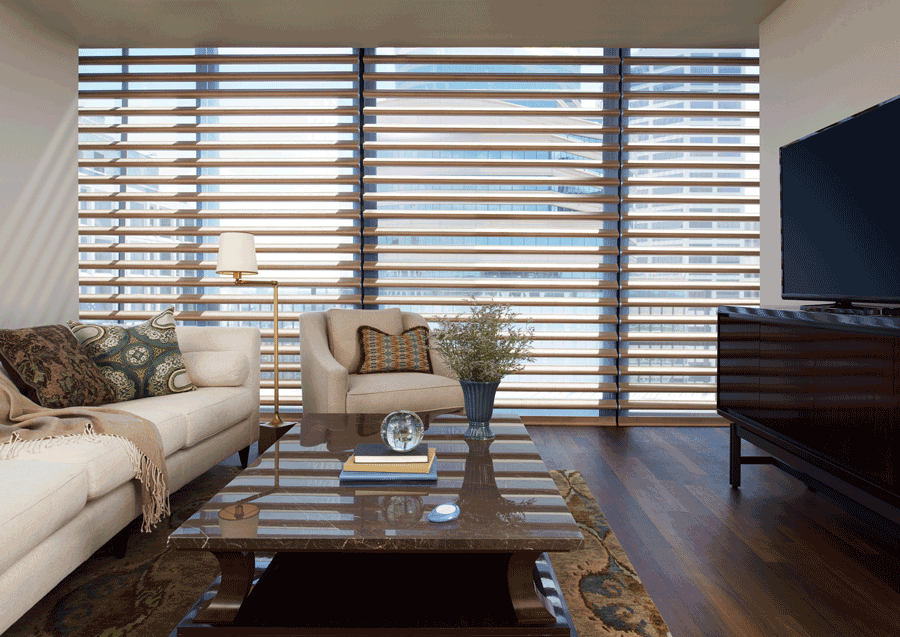
Floor-to-ceiling windows are often one of the strongest architectural features in a room, so the window treatment should complement rather than overwhelm them.
A streamlined roller shade can maintain a clean, contemporary appearance, while sheer shades can introduce softness without visually closing off the glass. Roman shades add fabric and dimension, and vertical treatments can complement particularly wide windows or expanses of glass.
If you’re still deciding which style fits your space, our large window covering ideas offer additional inspiration for coordinating treatments with your home’s design.
5. Make Tall Windows Easier to Operate
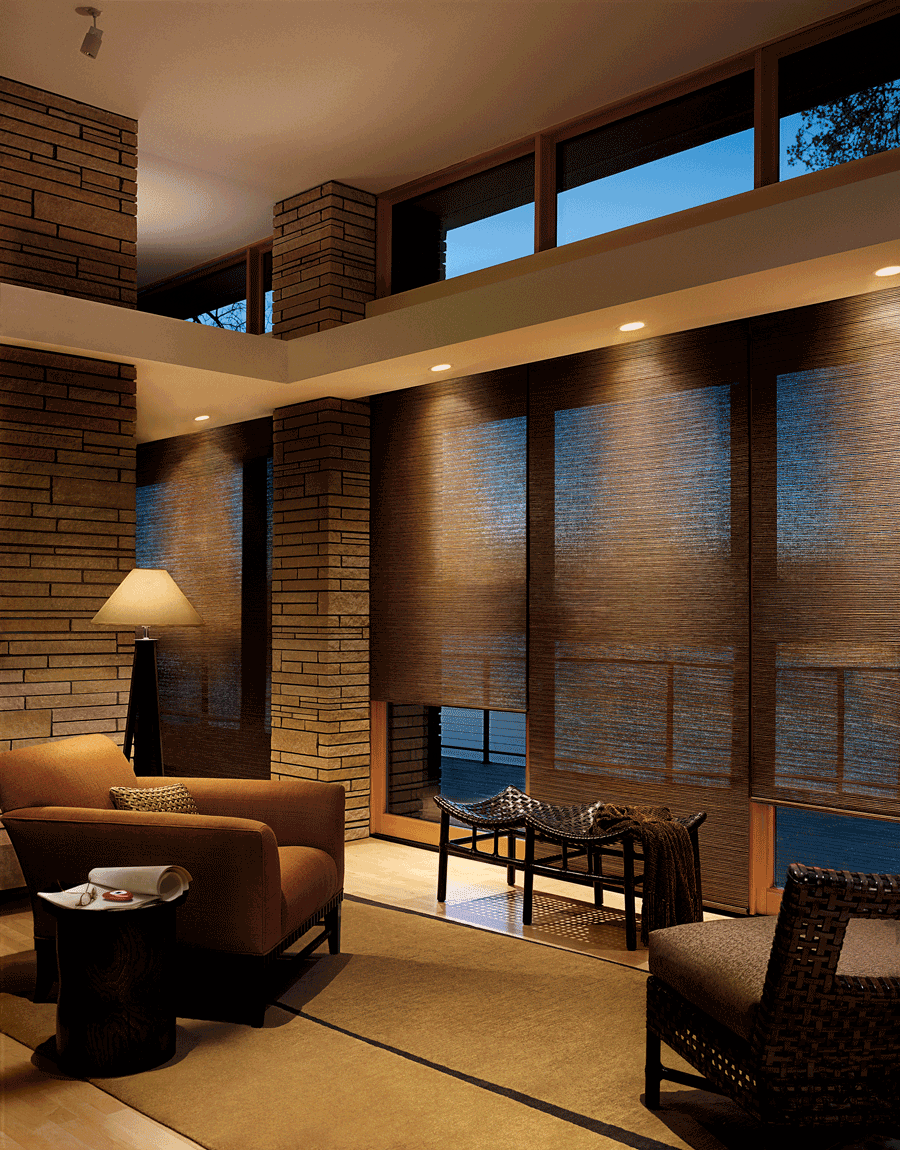
One of the most practical challenges with tall windows is simply reaching the window treatments. If shades are difficult to adjust, you’re less likely to use them throughout the day as sunlight and privacy needs change.
Motorized shades can make tall and hard-to-reach windows much easier to manage. With compatible PowerView® Automation options, shades can be adjusted with a remote or app, incorporated into schedules, or connected with compatible smart home systems for voice control.
What Works Best for Floor-to-Ceiling Windows?
The best treatment depends on the dimensions of the glass, how the windows are configured, the direction they face, and your priorities for light, privacy, energy efficiency, views, and operation. Roller shades, sheer shades, cellular shades, Roman shades, and vertical treatments can all be possibilities for large expanses of glass, but available sizes and operating options vary by product.
For a broader comparison of products and solutions, explore our window treatments for large windows.
Find the Right Coverage for Your Floor-to-Ceiling Windows
Floor-to-ceiling windows should remain one of the highlights of your home. The goal isn’t simply to cover them—it’s to give you more control over light, privacy, glare, comfort, and the view while preserving the architecture that makes them special.
At Austin Window Fashions, our designers can measure your windows, help determine which products are appropriate for their size and configuration, and recommend options that complement your home. Schedule your free consultation to get started.
